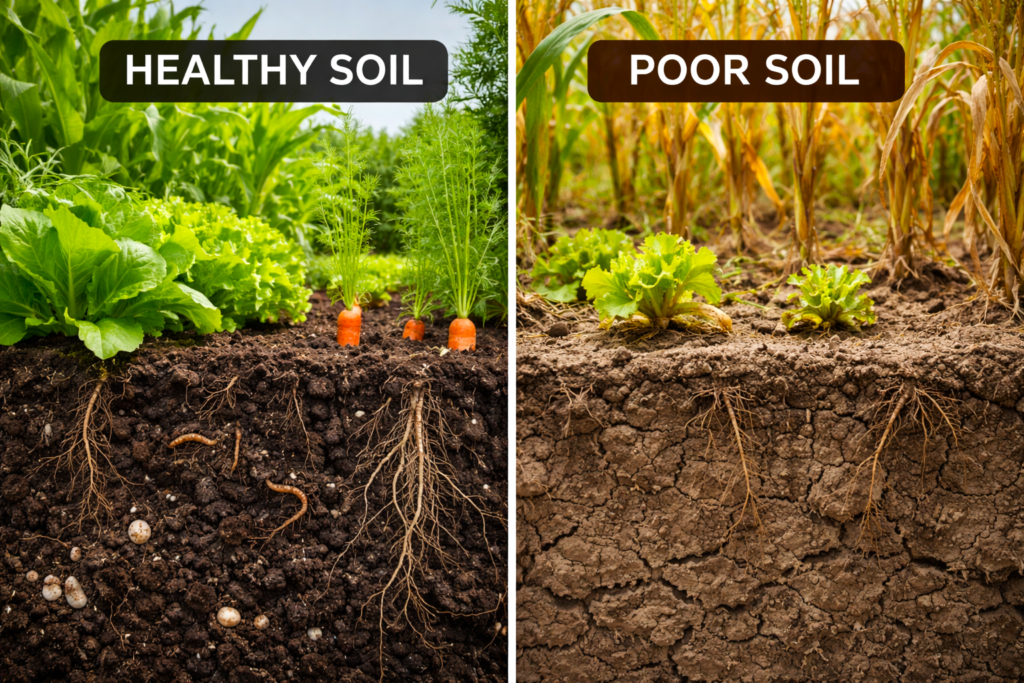
Soil is more than just dirt beneath our feet it is a living, dynamic system that supports plant growth, regulates water, stores carbon, and sustains biodiversity. Healthy soil is the foundation of agriculture and food security. However, maintaining soil health is not automatic, it largely depends on how humans interact with and manage the land. The role of humans in soil health management is therefore both powerful and critical.
Understanding Soil Health
Soil health refers to the soil’s ability to function as a living ecosystem that sustains plants, animals, and humans. A healthy soil system maintains its structure, fertility, biological activity, and water holding capacity. It contains organic matter, microorganisms, nutrients, and a good balance of air and water.
Human activities can either enhance or degrade these qualities. Sustainable practices improve soil health, while indiscriminate use pesticides and fertilizers, and unnecessary soli cultivation leads to erosion, fertility, and loss of productivity.
Roles of Humans in Sustainable Soil Health Management
Adoption of Sustainable Agricultural Practices
One of the most important roles humans play is adopting farming practices that protect and enhance soil quality. Techniques such as crop rotation, intercropping, and conservation tillage help maintain soil fertility and structure.
- Crop rotation- Prevents nutrient depletion and reduces pest build up.
- Minimum tillage-Helps maintain soil structure and microbial life.
- Cover cropping-Protects soil from erosion and adds organic matter.
These practices mimic natural ecosystems, ensuring long-term productivity.
Organic Matter Management
People play a key role in maintaining soil organic matter through the addition of compost, farmyard manure, green manure, and crop residues.
Organic matter improves:
- Soil structure
- Water retention
- Nutrient availability
- Microbial activity
Regular incorporation of organic inputs ensures that soil remains fertile and biologically active.
Efficient Nutrient Management
Balanced use of fertilizers is essential. Humans must ensure that nutrients are applied based on soil testing and crop requirements.
- Indiscriminate use of chemical fertilizers can degrade soil health and pollute water.
- Integrated Nutrient Management (INM) combines organic and inorganic sources to maintain soil fertility.
Scientific nutrient management improves yields while protecting soil from long-term damage.
Soil Conservation Techniques
Humans are responsible for preventing soil erosion, which is one of the biggest threats to soil health.
Effective methods include:
- Contour farming
- Terracing in hilly areas
- Windbreaks and shelterbelts
- Mulching
These techniques reduce soil loss due to wind and water, preserving the topsoil layer rich in nutrients.
Water Management
Proper irrigation practices help maintain soil health, over-irrigation leads to waterlogging and salinity, while inadequate irrigation creates stress on crops and soil organisms.
Humans can improve soil health by:
- Using drip or sprinkler irrigation
- Avoiding excess water application
- Ensuring proper drainage
Efficient water management supports both plant growth and soil physical and Chemical properties.
Promotion of Soil Biodiversity
Soil is home to billions of microorganisms, including bacteria, fungi, and earthworms. These organisms play a crucial role in nutrient cycling and organic matter decomposition.
Humans can support soil biodiversity by:
- Reducing chemical pesticide use
- Encouraging organic farming
- Maintaining crop diversity
Healthy biodiversity leads to resilient and productive soils.
Negative Impacts of Human Activities
While humans can improve soil health, certain activities have caused severe degradation:
Excessive Use of Chemicals
Overuse of fertilizers and pesticides disrupts soil microbial balance and reduces fertility over time.
Deforestation
Removal of vegetation exposes soil to erosion and reduces organic matter input.
Overgrazing
Uncontrolled grazing leads to soil compaction and loss of vegetation cover.
Industrialization and Urbanization
Construction and industrial waste can contaminate soil and make it unsuitable for agriculture.
Recognizing these impacts is the first step toward corrective action etc.
The Way Forward: Human Responsibility
The future of soil health depends on responsible human behaviour. Farmers, policymakers, scientists, and citizens all have roles to play.
Key Actions Include:
- Promoting sustainable agriculture policies
- Encouraging soil testing and awareness programs
- Supporting organic and eco-friendly farming
- Reducing land degradation through proper planning
- In developing and agriculture-based nations, integrating agricultural education into the 10+2 curriculum is essential to equip young minds with practical skills, ensure food security
- Education and awareness are essential to ensure that soil is treated as a valuable natural resource, not an unlimited one.
Conclusion
Humans are both the cause of soil degradation and the solution to soil restoration. Through mindful practices and sustainable management, we can protect and enhance soil health for future generations. Healthy soil ensures food security, environmental sustainability, and economic stability.
In simple terms, if we take care of the soil, the soil will take care of us.