A Story About Reclaiming Attention
It was a quiet afternoon in the classroom. The ceiling fan hummed softly as students sat scrolling on their phones, eyes glued to endless feeds.
“Arjun,” the teacher called gently, “what are you looking at?”
Arjun looked up, slightly startled.
“Nothing, sir… just Instagram… I opened it for a minute.”
The teacher smiled knowingly.
“And how long has that ‘one minute’ been?”
Arjun checked his phone. “Forty minutes…”
A few students laughed. The teacher walked closer and said,
“That, class, is exactly where our story begins.”
The Teacher’s Story
“Imagine,” the teacher began, “you walk into a library to read one page of a book… but the doors lock behind you, and every shelf keeps pulling your attention in a different direction.”
“That’s what apps like YouTube, TikTok and Instagram do. They are not accidents, they are designed to keep you there.”
The room grew quieter.
“But,” he continued, “some people have started pushing back. They call it digital minimalism.”
A Simple Idea, A Powerful Change:
The teacher wrote on the board:
Digital Minimalism = Use technology with purpose, not impulse
“This idea,” he explained, “was made popular by a writer named Cal Newport.”
He turned back to the class.
“He said something important—we don’t need more technology… we need better boundaries with it.”
What Science Reveals
“Now tell me,” the teacher asked, “have you ever tried studying, but your mind keeps jumping?”
Everyone nodded.
“That’s not just you. Research shows:
- When you switch apps often, your brain loses focus
- Even having your phone nearby can reduce your thinking ability
- And those endless scrolls? They trigger dopamine—the same system involved in habits and addiction”
Arjun raised his hand. “So… it’s not just lack of discipline?”
The teacher shook his head. – “No. It’s design.”
Real-Life Changes Happening Today
“People are responding in interesting ways,” the teacher continued.
“Some are going back to simple phones—only calls and messages. No distractions.”
“Others follow something called a 30–40 day reset.”
“Why 40 days, sir?” a student asked.
The teacher smiled.
“In many cultures, 40 represents transformation—a period long enough to truly change habits.”
Even Creators Are Stepping Back
“Even people who live on the internet are stepping away,” he said.
- “Some creators post less”
- “Some quit platforms entirely”
- “Many moves to slower spaces like blogs or newsletters”
Life Without Social Media
The teacher paused and asked,
“What do you think happens when someone leaves social media?”
A student replied, “They get bored?”
“Sometimes,” the teacher said, “but often they find something else.”
He listed on the board:
Benefits:
- Better focus
- Less stress
- More real-world time
Challenges:
- Missing updates
- Feeling disconnected
“So,” he added, “many people don’t quit completely – They choose wisely.”
“Like keeping LinkedIn for career, and removing the rest.”
Clearing the Confusion.
“Now listen carefully,” the teacher said.
“Digital minimalism is not:
- Hating technology
- Living alone in the mountains
- Or becoming obsessed with productivity”
“It is simply:
- Choosing what matters
- Ignoring what doesn’t”
The Teacher’s Challenge
The teacher looked at the class with a calm seriousness.
“Let me give you a small challenge – not 40 days… just 7.”
- Remove one distracting app
- Turn off unnecessary notifications
- Keep your phone away during meals
- Replace 30 minutes of scrolling with something real
“Try it,” he said. “Observe what changes.”
A Deeper Lesson.
“As strange as it sounds,” the teacher added,
“this idea connects to something ancient.”
“In many traditions, the number 40 represents growth through limitation.”
“Digital minimalism works the same way.”
“When you reduce noise… you begin to hear what truly matters.”
The Ending That Wasn’t an Ending
The bell rang.
Students slowly packed their bags, but something had shifted. Fewer eyes were on screens.
Arjun looked at his phone paused and put it back in his pocket.
“Sir,” he said, “maybe I’ll try those 7 days.”
The teacher nodded.
“That’s all it takes to begin.”
Final Thought:
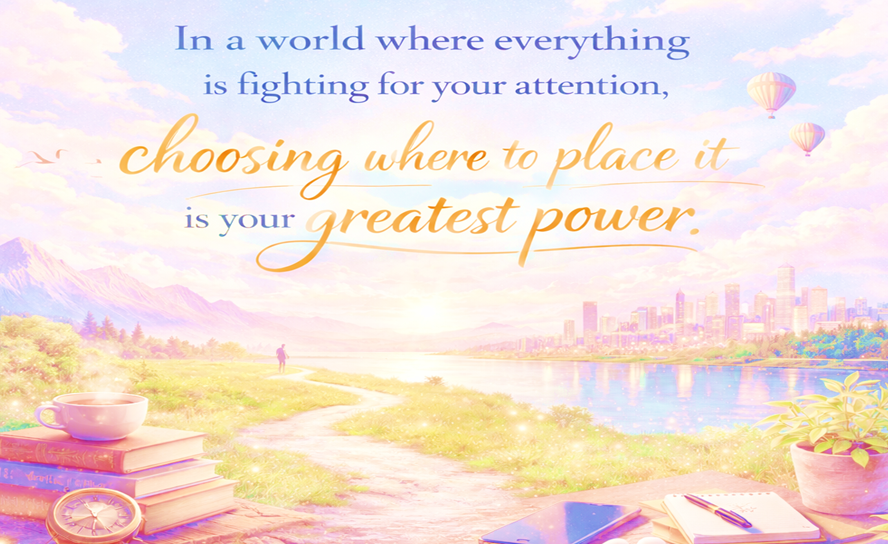
In a world where everything is fighting for your attention,
choosing where to place it is your greatest power.